Showing posts with label vegetables. Show all posts

Saturday, April 01, 2017

Overwintering Kale

Kale.....yummmm....kale. We bought this variety last summer called: Russian Red.


The great aspect of harvesting kale as it grows, it gets taller and taller, which helps deter it from too much slug damage and makes it easy to pick leaves.


Last year we grew it in pots; we grew it in perennial beds and we grew it in our herb garden.


Our herb garden is slightly shaded on one side and protected from serious winds. Sparing it from the compost, I left it with overwintering hopes. Lo' and behold, it did survive. Thankfully our winter was milder than expected.

I had spring hopes for this particular plant. We heaped leaves and debris over the base of the roots to help insulate it. Even though we enjoyed as many leaves from it as possible, I made sure to spare the top bunch of leaves to keep the plant alive. The flavour of kale is enhanced due to the cold weather, so the others we grew in our other locations were completely harvested. They were so tasty.


Now as you look closely, the buds along the main stem are starting to open.  This was my hope for the spring. Yay!

We will harvest small plant-lets as they unfurl and put them in salads or stir fries. Will let you know if they are bitter or whatever taste emerges. As it keeps growing, we hope it bolts and provides us with seeds for this coming summer to keep the cycle of plants going.

....

So happy to see other plants peaking through as well:

Raddichio is a hit and miss, so we are happy to see some return for our salads this spring.


Parsley too.

Makes us happy to have a few plants we can harvest from this spring. Helps take the edge off waiting to see our tiny seedlings give us hope for summer harvests.


Hope you've had some luck overwintering tender plants in southern Ontario too.  So glad spring is here!

----

Update on Kale:


It's now, May 7th and the Kale has grown over a foot taller with more "florets" and leaves for us to enjoy. I will use as much as we can before it bolts and sets seed. I thoroughly am enjoying this extended season of harvest. We've eaten the florets from the stem in salads and stir fries. So yum!

Wednesday, June 12, 2013

Update - Decorative Vegetable and Herb Planter

I love demonstrating plants growing. It's been about 2 weeks since we planted this container in our last post: Decorative Vegetable and Herb Planter.

Once this photo was taken, we harvested a bowl full of lettuce, leaving still plenty more for later this week.
Unfortunately, we underestimated the tomatoes growing as fast as they have. It shades a lot of the underplantings. The dwarf dill had to be removed, as it was starting to rot out from lack of sun.


All in all, the growth has been so satisfying. We've not used any fertilizers. The weather has co-operated and we are enjoying the harvest!

Wednesday, May 29, 2013

Decorative Vegetable and Herb Planter

I love planting in containers, because you can place them where ever a situation needs colour, or to maximize sunny areas in the garden.

Why plant just flowers? This year, instead of planting the usual annual assortment, we decided to fill this decorative container brimming with veggies and herbs.
36 inch concrete trough
First, we removed about a third of last year's soil and...

replenished it by adding 1/2 of composted sheep manure and....
 1/2 of black earth. Mixed thoroughly with the existing soil that had perlite. It's necessary to have vermiculite or perlite; this encourages proper drainage and root development. Otherwise the soil becomes hard and roots struggle.

We started by planting the tomatoes and their supports. These are heirloom and beefsteak tomatoes. The supports are somewhat unsightly at first, but once tomatoes arrive, the tomato foliage will camouflage the stakes.


Our desire was mainly for culinary purposes, but colour and texture was also considered.
#1  Dwarf Dill (12-20" tall)
#2  Variegated Oregano (trailer)


#3 Curly Red Lettuce
#4 Bright Lights Swiss Chard
#5 Dark Little Leaf Lettuce
(repeated on the left side)

We didn't over plant - spaced for adequate growth. However, there is still enough room, if one wishes to plant some annuals, in case one misses summer blooms. ;)

Will update on the growth and colouration. Can't wait to harvest too!
Our desire is to harvest every plant from this container, so it benefits the kitchen, our tummies and it'll have less waste going into the compost come autumn.

Update: here

Monday, May 21, 2012

Edible Ornamentals

My garden is too small to have a separate veg patch. Last year I decided to add my veggies in between my ornamental plants and I was happy how they blended in with my perennials. I'm tired of plants only looking good. In the last couple of years, I'm quite glad to see garden design trends here in Canada including plant material that have edible benefits, outside of a solitary vegetable patch hidden in the corner.
Strawberries in bloom, great ground cover.

If you're interested in adding edible ornamental alternatives that come back each year, here are many perennials and woody shrubs that I could think of here for my zone (5b, 6a). Offering visual interest and edible benefits for any front or back garden borders:


Hardy overwintering edibles:
  • Blueberries - fruit and wonderful fall colour
  • Gooseberries - fruit bearing in a leafy shrub border
  • Red and Black Currant - great bush for borders or informal hedging
Few more weeks....then....mmmm. :)
  • Allium - chives with tall texture and lovely purple flower tops
  • Strawberries - ever-bearing white flowers with red leaves in fall - great ground cover
  • Serviceberry Trees - white flowers, lovely edible berries and great fall leaf colour
  • Garlic Chives - white flowers and edible leaves
  • Asparagus - ferny foliage, spring harvest
  • Quince - beautiful flowers, great fruit
  • Elderberry - flowers and berries useful for cordials and sauces
  • Violets - flowers are edible, great for salad
  • Rose species (Rugosa and Villosa), rose hips for canning or tea
  • Mahonia - Oregon Grape, yellow flowers, glossy foliage and blue-black edible fruit
  • Lavender - herb uses 
  • Thyme - great ground cover

Here are some annual (non hardy) plants that add visual interest while providing edible qualities:
  • Carrots  - ferny foliage, great in clumps instead of rows
  • Nasturtium - flowers are edible, great for salad
  • Purple Ruffles Basil - great contrast colour and useful in cooking
  • Parsley - coarse ferny leaves
  • Cilantro - coarse ferny leaves
  • Red Russian Kale - leafy texture and attractive colour
  • Bright Light Swiss Chard - leafy texture with brilliant stems
  • Sweet Pea - sugar snaps, lovely flowers and great vine
  • Red-leafed lettuce - contrasting red foliage
  • Oregano - ground cover, purple pink flowers
  • Rosemary - rigid growth which look similar to lavender

I decided on more containers this year and will be adding nasturtium, sweet peas, cilantro, russian kale, swiss chard, red-leafed lettuce into my annual displays.  Their unique foliage colour, texture and growth habit camouflage the fact they are actually edible. At least this way you enjoy your garden more with fruitful yields, adding visual interest as well.

Monday, April 23, 2012

Cilantro (Coriander) from grocer....planted on.

Having had a craving for Vietnamese Fresh Spring Rolls today,  I stopped at my local supermarket on the way home to pick up some fresh cilantro. A fresh batch was just set out and I was delighted to see healthy, crisp roots still attached. Then my green fingers thought - these are perfect planting specimens!


Not only did I get the cilantro I needed for my dinner, but I now have an edge on getting a batch started for the summer.

I never start plants by seed, since I only have one full sunny window. Sniff, sniff, as I wish I could.

I just end up buying plant-lets at the garden centre which can be costly. Since this spring season has been so unusual temperature wise, I've been hastily waiting. I'm glad I didn't buy any cilantro. Instead, now I have plants and herb bliss in the making today!


First I took a good look at the bundle and separated the good bunches from the not so good ones. Then I rinsed them with cold water.

I then took each plant and took off the outer bulky stalks that are perfect for my recipe but too much bulk for my starter idea.  I left 2 to 3 stems of the new growth in the middle (having to remove the outer stalks sometimes by scissors, if the centre was thin).

I found one of my herb pots and filled it with 1 part compost and 1 part potting soil (leaving 2 inches from the rim). I poked holes with my finger and then gently wedged the cilantro roots down. 


Any leafy bits that looked wilted or that looked weak, I cut back.  This reduces stress on the planted roots. You've got to remember, this cilantro had a lengthy travel from the where it was grown to my kitchen. Many leaves and stems would of been bruised or damaged.


I didn't firmly pack down the soil, I watered it well until I found the soil settled nicely, making each stalk stand rigid.

I managed to get about 12 stalks in this 8 inch pot. Not bad for having paid $1.49 for the entire bundle. Hopefully in a few weeks, I can pick more fresh Cilantro!

Friday, April 20, 2012

Edible Flowers

I love salads and get a kick out of decorating them with edible flowers. Now that spring is here, I look forward to foraging for flowers. These edible flowers are great for cake-top decorating too.


These are the ones I have tried and will plant a few to harvest throughout the growing season:
Peony petals
Yucca filamentosa "Adam's Needle"
Petals of flowers only on Yucca
Rocket Arugula

  • Viola (not pansies, but the perennial, self seeding Viola)
  • Nasturtium
  • Hosta Flowers (without stamen and anthers)
  • Rocket Arugula (Eruca sativa)
  • Lavender
  • Basil flowers
  • Mint flowers
  • Pinks - Dianthus
    Chives
  • Chive and Onion flowers
  • Squash and Zuchinni (Corchets)
  • Sugar Snap Sweet Pea
  • Yucca filamentosa (petals only)
  • Borage 
  • Peony petals

My favourites are underlined.

Here are other online sources of edible flowers .

Friday, March 02, 2012

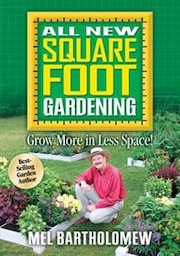
Square Foot Gardening

If you are planning to grow your vegetables in raised beds, try this method: Square Foot Gardening.

I remember watching the PBS program, "Square Foot Gardening" when I was a kid. Learning heaps then.  Now, Mel Bartholomew has revised his book from the 80s, concentrating on companion planting, diversifying plant species, improving soil mixes for minimal watering and avoiding chemical usage (for pest or fertilizers).

Great idea for small spaces, for implementing a no-dig method, it minimizes weeding, and is easier on the back.

Monday, February 27, 2012

Vegetables for shade

Late summer 2011
It feels like spring out there and I can't help share my veggie plans for this coming season.

Now that I have more knowledge of what light conditions my garden has, I have made my list and developing plans for what vegetables and herbs I would like to plant.

I'm keeping in mind: "If you grow a plant for the fruit or the root, it needs full sun. If you grow it for the leaves, stems, or buds, a little shade will be just fine".


Vegetable plant list for 2012: *Photos from OSC Seeds
*Baby Leaf Blend Lettuce
  • leaf lettuce
  • mache (lamb's lettuce)
  • arugula              
  • swiss chard
  • spinach
  • kale
  • beets (for leaf too)
  • radishes
  • basil
  • parsley
  • cilantro 
  • *Cherry Belle Radish
  • cherry tomatoes
Leafy greens, radishes, beets and herbs are my choices. They are tolerant of some shade, not huge amounts, but certainly partial sun and dappled sun.  My containers will be ideal for more herbs, outside of my perennial chives, mint and hopefully my oregano will overwinter.

*Bright Light Swiss Chard
In regards to lettuce, arugula, kale, swiss chard; I will purchase seedlings from my local garden centre instead of sowing them myself. I find the organic selections are far better established than I could ever seed indoors with low light. I could wait to seed outdoors, but my harvest season will be delayed if I wait until May.  The lettuce, arugula, beets and spinach however, will require more than one crop. I have bought seed packs now, just so that I can sow in containers and transplant more mid to late summer, that way I can extend my crop harvest.

Last year I had success with lettuce, spinach, parsley, basil, oregano, thyme, chives and cherry tomatoes. I tried leeks, mini carrots, onions, garlic and although they weren't terrible, I would rather have better. I have spots with about 6 hours of sun - it just isn't enough.


One trick I learned to maximize sun, is to situate a large pot on wheels. I had an abundant crop of cherry tomatoes last year, allowing easy movement towards sunnier areas on my patio. The sun's intensity changes from spring to fall, this way I extended my yummy cherry tomatoes until October...they are my FAVOURITE!

With this years selections, at least I'll be getting enough greens!

Saturday, February 25, 2012

Companion Planting - Vegetable Garden Planning

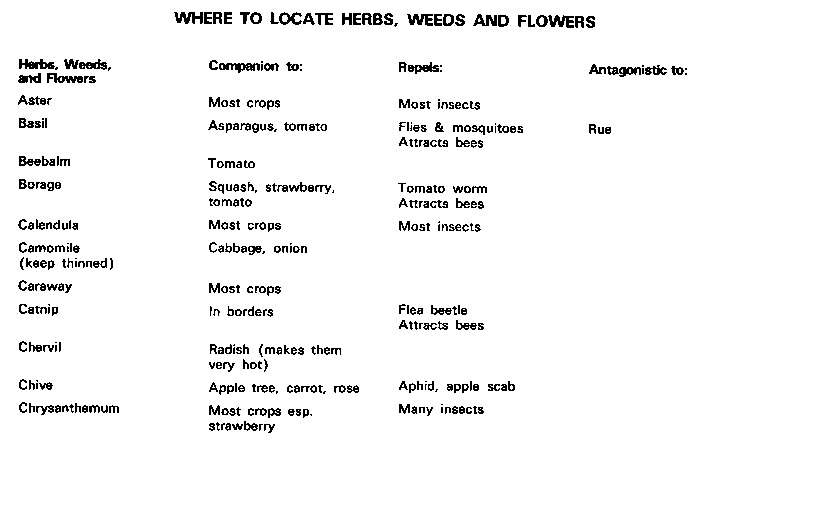
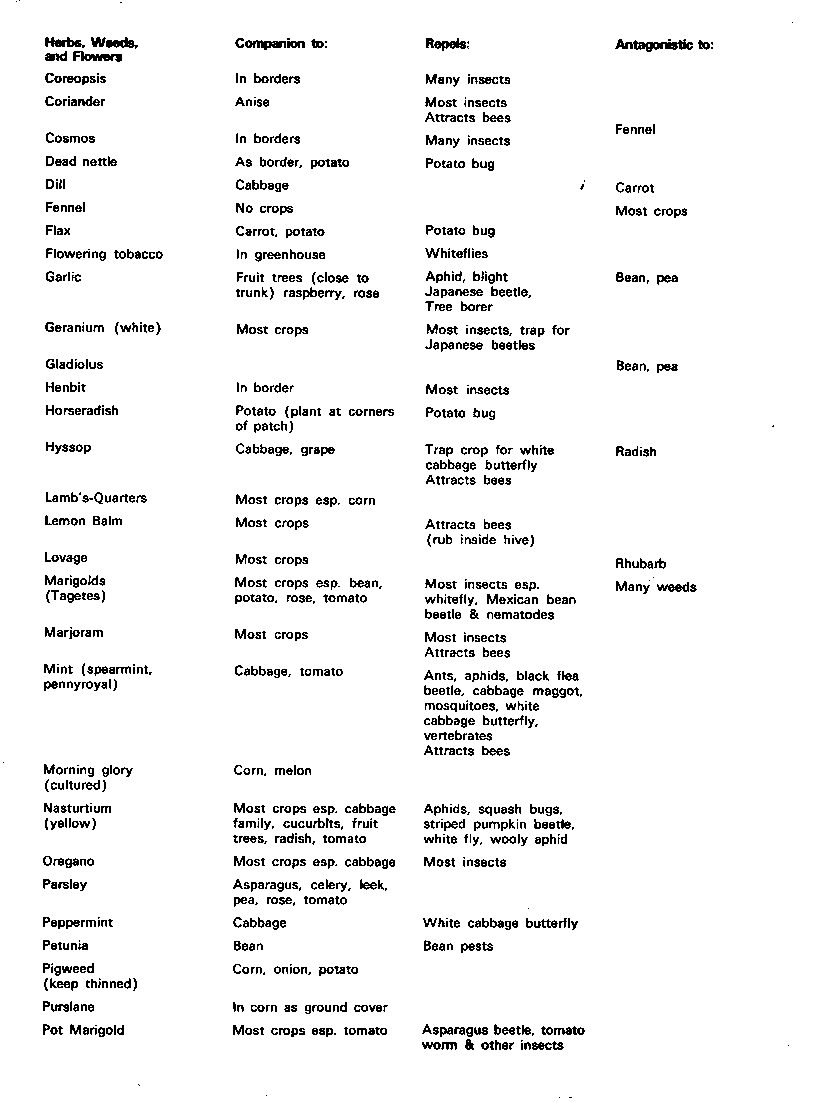
Companion planting is not complicated. It is so beneficial and should be a part of your vegetable garden planning.

When you group a lot of veggies and segregate them from other plants in your garden, you'll wind up making them an easy target for pests and you may deplete the soil if you replant the same vegetation year after year in the same place.  Planting them in smaller groups, among other companion plants, will introduce a whole variety of beneficial insects and or plant life that aid the growth of your veggies.

  • Some plants fixate nitrogen in the soil - legumes and certain clovers do that well.
  • Some exude chemicals from their root system that keep bugs away - Marigolds and Chrysanthemums are ideal.
  • Some repeat in bloom all summer, which bring bees and other pollinators to the garden.

Here are great resource lists of companion, and incompatible plants you should know about.

It works for berries too

In the past, I've used these plants together with success:
  • Nasturtium - with radish or lettuce
  • Marigolds - with herbs
  • Garlic or Campanula persicifolia - with roses
  • Borage - with spinach, lettuce, cabbage
  • Beebalm (Monarda) - with tomatoes
  • Chrysanthemum - with strawberries

Now that my garden is so small, I have limited space to plant all sorts of companion plants. However, I am planting my veggies in with perennials and shrubs and I noticed the benefit last year and will do it again.

Monday, February 20, 2012

Determining light conditions

It's hard to think about gardening when it's February. One can't help but plan.
 
My town-home garden gets quite a bit of shade at different parts of the day. Light levels change with seasons, and with the neighbouring complex units getting in the way, it's not as easy to situate plants as I would like.

I want to enjoy colour, texture, flower and foliage all in one - instead of sectioning off areas strictly for veggies and flowering plants. I wouldn't be able to grow a section for vegetables anyway, since the sun intensity is so sporadic. I enjoyed mixing the garden all about last year. It was quite colourful. It also provided my vegetables with beneficial insects, which attacked unwanted pests that usually invade veggies if they were situated alone.

Unfortunately, shade limits my choices in vegetable planting.

I'm not fretting for having too much shade. There's a fantastic rule to remember ; "If you grow a plant for the fruit or the root, it needs full sun. If you grow it for the leaves, stems, or buds, a little shade will be just fine". 
Dotted solar lights throughout
My main focus last summer was learning and watching where the sunniest spots were in my garden. The most efficient way was to use my solar garden lights. They helped me determine how much sun I have by their length and duration of  illumination during the night.  I couldn't watch the garden all day, so this was my only other option to get accurate info.  Last years positioning of them was a testing ground for determining where my sunniest spots are.

Those bright spots were marked in the fall and now I am just waiting until spring arrives!


Monday, February 13, 2012

Looking back at 2011...Planning for 2012

Last year I had a blank canvas.


Realtor photo

The previous owners had 2 perennials and one rose bush in the corners of the backyard, with grass and patio stones.


They had a dog which tore up most of the grass and yellowed other areas..if you know what I mean.


Since I have limited space, I decided to do away with all the grass, which was easy to do and great to compost.


Added small stepping stones; to walk through garden.
I decided to move some of the patio stones, remove all the grass and develop a garden with limited knowledge of light conditions, soil, roots from trees...etc.


Thankfully, the week I took possession, I was able to divide certain favourite perennials from my previous garden and use them here.

 
Sorry, I washed and hung the air conditioner cover over my chair. At least the perennials were starting to come in nicely.


Because my light conditions were sporadic - I had to dot my veggies in areas where they received more sun.

As the season progressed, I added more containers, filled in areas with some annuals and harvested my herbs and veggies, when ready and thoroughly enjoyed my little garden.

Can't avoid the distortion from the screen, aerial shots from my second story window.
It's been such a stark contrast gardening here from my other ravine lot garden, but I am SO grateful!  No rabbits, no dear, no racoons that come dig up my planted friends. I have freedom (outside of limited light conditions and a few squirrels) to plant whatever I like.

Don't let little spaces burst your bubble of creativity. I can't wait until this years planting season!
Related Posts Plugin for WordPress, Blogger...