Showing posts with label roses. Show all posts

Wednesday, November 02, 2016

Rust on Roses - Phragmidium tuberculatum

Now that it's November, leaves are dropping everywhere.  Yet, this David Austin Rose  doesn't seem to want to let them go!


Notice anything wrong with the leaves?


Those brown/reddish speckles are not normal.


Turning this set of leaves around, do you see the little orange bumps?

This is called Rose Rust (caused by a parasitic fungus called: Phragmidium tuberculatum). Very common, among numerous rose cultivars, especially older hybrids. Some roses are far more susceptible to it than others.


Given the rose will eventually drop its leaves anyway - I removed every one from the rose and they will go in the garbage. This form of rust persists until the leaves drop and if I don't remove them from the site, the probability is higher for the rust to return next year. The best is to destroy or toss in the bin.


I've seen rust so bad on roses, that large lesions can be seen on the stems as well. Thankfully, in this circumstance, I didn't notice any.

Usually I give the roses a hard cut back in the spring, but in this case, I hit it back hard to promote air circulation over winter and come spring. Poor air circulation is one of the main causes of rust developing.

Rust can weaken the plant, diminishing flower bud development. What's a rose without its bloom?

There are fungicides on the market, but I rather use this preventative method, in hopes it will not return next year.


The black pimples, or pustules are the ones that over winter for next year.  The photo above shows how the orange bumps begin to darken to black. This is why you must remove the leaves.

Leaf removal can be done in the summer too, as many roses will respond by re-foliating.

Well worth the effort.


Sunday, May 03, 2015

How To Prune Roses

I prune A LOT of roses at work; I get asked how to go about pruning them properly. In the spring, it's important to prune to encourage good air circulation; to cut out any dead wood and remove any suckers or weak branches. Doing this will encourage new growth that will produce many flowers.

Use: sharp, clean tools:  like : Felco Pruners for thinner stems and Stihl Loppers  for hard wood, dead and branches from the ground level.

For the most part, roses flower on new growth. With the exception of climbing roses, be aggressive with pruning varieties like Hybrid T's, Grandifloras, Floribundas and Shrub roses. Especially after a winter like the last.


Don't prune back roses too early. Wait for buds that are robust. Cut the stem back to just above these buds.


At the base of the woody stems and the crown of roses, you may see new, tender shoots emerging in early May. If you have considerable dieback from winter damage, these shoots are crucial to examine. The above photo shows the new shoot is emerging from above the grafted crown of the rose. This growth is true to the cultivar that you want to see bear flowers. The photo below shows shoots coming from the soil...


In the above photo, shoots that are emerging from below the soil surface are not good. These are suckers emerging from the rootstock.

Let me explain: some of the most beautiful roses (Hybrid Teas, Grandifloras, Floribundas, David Austins...etc) are grafted plants. They have a rootstock grafted on scion stock. Scion stock bear the beautiful hybrids that wouldn't grow in cooler zone hardiness areas. The graft makes growing such beauties here in Ontario possible. When you see rootstock shoots emerging from the ground, they are a different rose than the growth above the graft. If left to grow, these shoots may take over, suppress the grafted stock and you will have a completely different rose bloom come June. Keep your eye on this throughout the growing season. Especially on older roses, where the grafted union of the crown may be heaving or sinking too deep into the soil.


I've pruned more than half of this grandiflora back. Having removed any overlapping, cross over stems, decayed, weak and dead branches.


Be sure to cut back to buds that are facing outwards - so that new growth will not be too concentrated in the centre of the plant. This keeps air flowing and gives it a more open habit.

Please don't leave stumpy, long ends to your cuts. Cut 1/2 inch above the bud (node). The is ample distance from the bud to prevent damage from cutting. Reducing the amount of stem between the buds will help engage the bud to produce more terminal growth.

In the above example, I didn't cut this rose back to the ground like some gardeners do as a general practice, as I prefer to have a taller habit and bigger show. Grandiflora roses have larger flowers. If left to flower on only tender, green pliable stems, the flowers can make these stems flop over from the weight.  Making for a weak, unattractive shape to the overall plant. Leaving woody stems with robust buds will give the rose strength and help boost flower production.

Be sure to remove all leafy debris from the base of the plant and give them a top cover of mulch or a perennial ground cover (like the Gallium plants above). This prevents the soil surface from drying out.

Come mid summer, I will post how to thin a rose bush; to create a better habit and increase bloom.

Saturday, May 26, 2012

Year of the Aphids

It's been a month of Aphid invasion here in the Greater Toronto Area. Their sheer numbers at this time of year is quite threatening. I've seen them feast on everything, from trees (especially Maples, Locusts and Horsechestnuts) to Burning bush, roses, Acquilegia, Spirea, Coreopsis....etc.

Here you can see the adult and instar (younger) stages of Aphids
Their first evidence is shiny leaves. They excrete "honey-dew" excrement which rains down on foliage below, giving leaves a shiny luster. This is quite visible on shade trees. Other evidence is their sheer number count. They are clearly visible when 20 to 30 congregate on leaves/stems. Sometimes they have distinctive colours. Black, green, yellow, and white/wooly appearances. Then there's the winged stage of life cycle. You'll notice them flying about when their previous in-star white skeletal remains are left on leaves below. Adults birth mini-me's and they begin to feed voraciously.

Victim: Rose  White skeletal remains can be seen here.
I believe their numerous presence is due to the unseasonal dry and warm temperatures we've endured already this spring. I cannot recall a May where evening sounds are permeated with the hum of airconditioners instead of birds.  Closed windows at night are rare this time of year. It's been hot!

I use 3 natural methods to keep aphids at bay in my garden.

1) Squishing them with my fingers (ok, for those of you who say - eeew, please....just use gloves then). They're just filled with plant juice, so it's a no-brainer. I just run my fingers on the cluster of aphids and squish away. I rinse the area with a light spray of water to dislodge any remaining hanging on.

Gently squish without damaging new growth.
2) I spray with a nettle and dish-soap mixture when I see them everywhere. (Steeped nettle leaves in water [it takes 2 days to steep]. Strain and pour water with 1 teaspoon dish-soap in a spray bottle). I use this mix especially where I can't squish aphids, in fear of damaging newly forming leaves. This takes time to prepare in advance, so on the spot care - just take your hose and spray the infested area, (not too hard to damage the foliage) to dislodge them from the plant. They will drop to the ground and eventually dry out from a lack of food source.

3) Prune off the worst of it. This reduces their populations and removes the succulent new flushes of growth they LOVE to feast on. This is a last resort method. Otherwise, you may be removing flower buds forming or stunting growth. But, it is a true winner for reducing their numbers.

Preventative measures:
No biggy. It washes off, folks. :)
Watch - keep your eye on new growth. Aphids love tender young foliage. Looking closely once a week will enable you to take quicker action before population levels increase to where you need chemical controls.

Ants - when you see them climbing on your plants, they are after the honey-dew. They harvest it, by coaxing the aphids to poop more. (Gotta love bugs.) Ants devour their sweet remnants and perpetuate the cycle.

Keep your plants hydrated, by watering the in the morning hours. Spraying the new growing foliage with water isn't the best way to water your plants, but it certainly wouldn't hurt to reduce aphids from multiplying and causing damage. Hose off in the morning hours - this allows foliage to dry out during the day, preventing powdery mildew and other fungal diseases from also forming.

When there are sheer numbers as in my photos, you'll find a Lady Bug (Bird, Beetle UK) or it's larvae form feasting on them, among other predatory insects. I usually leave them a leaf full of Aphids for them to enjoy.

This is not the first time I've seen Aphid populations being so abundant. Cycles in precipitation and weird weather patterns facilitate these blips on the richter-scale of bug life. Not to be overly concerned. Your trees won't die with Aphid attacks, they will however weaken if it is an on-going situation each year. The good thing, as Aphid populations increase, so do their predators. If your tree looks further sickly by summer, contact a reputable arborist to take further action.

Saturday, February 25, 2012

Companion Planting - Vegetable Garden Planning

Companion planting is not complicated. It is so beneficial and should be a part of your vegetable garden planning.

When you group a lot of veggies and segregate them from other plants in your garden, you'll wind up making them an easy target for pests and you may deplete the soil if you replant the same vegetation year after year in the same place.  Planting them in smaller groups, among other companion plants, will introduce a whole variety of beneficial insects and or plant life that aid the growth of your veggies.

  • Some plants fixate nitrogen in the soil - legumes and certain clovers do that well.
  • Some exude chemicals from their root system that keep bugs away - Marigolds and Chrysanthemums are ideal.
  • Some repeat in bloom all summer, which bring bees and other pollinators to the garden.

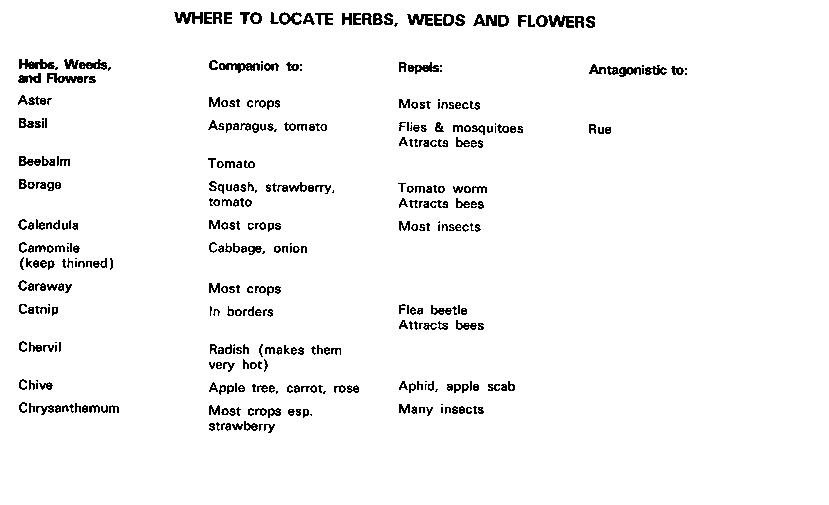
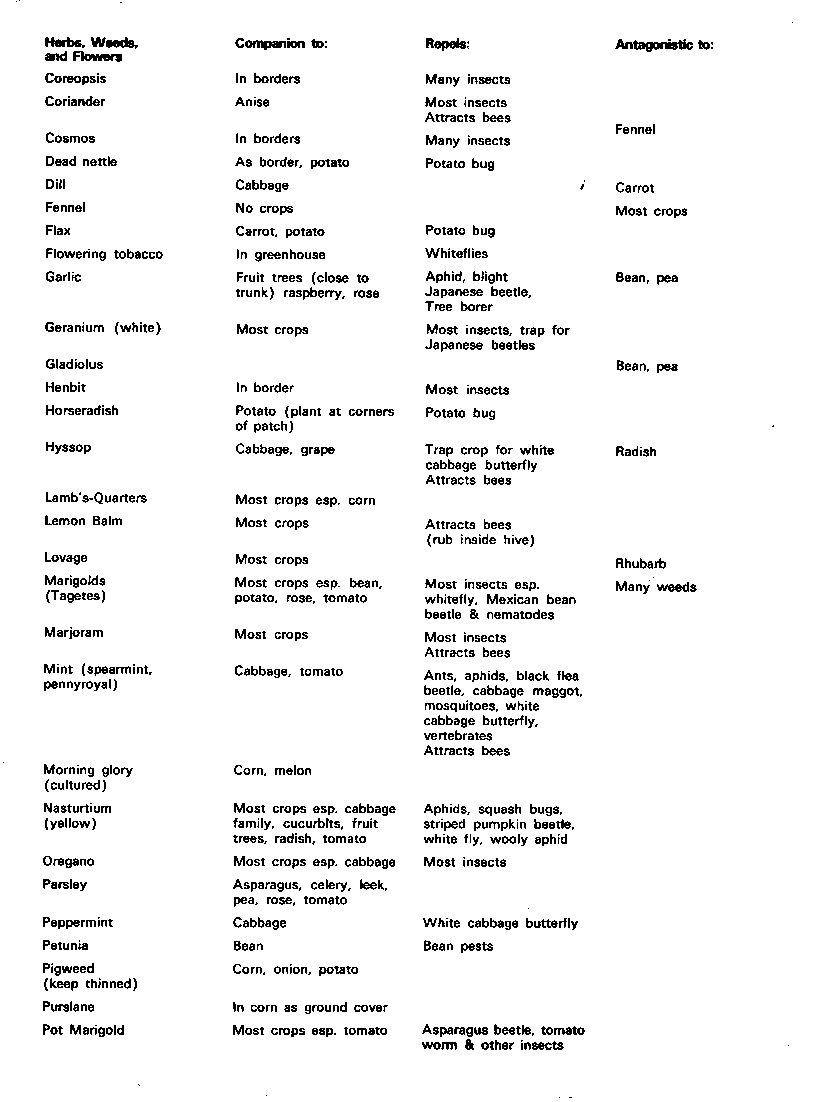
Here are great resource lists of companion, and incompatible plants you should know about.

It works for berries too

In the past, I've used these plants together with success:
  • Nasturtium - with radish or lettuce
  • Marigolds - with herbs
  • Garlic or Campanula persicifolia - with roses
  • Borage - with spinach, lettuce, cabbage
  • Beebalm (Monarda) - with tomatoes
  • Chrysanthemum - with strawberries

Now that my garden is so small, I have limited space to plant all sorts of companion plants. However, I am planting my veggies in with perennials and shrubs and I noticed the benefit last year and will do it again.

Sunday, February 05, 2012

Evergreen or Ever-bagged All Winter Long?

Going for long walks this winter, I've developed a pet peeve, basically a design irritation when it comes to wrapped evergreens and broadleaved evergreens. Seems to me that an evergreen is an EVERgreen and should be seen and enjoyed all year long.
I see burlap, boxed contraptions, bags, just about anything someone could use to wrap their plants. In most cases this is unnecessary if we examine alternatives and proper placement of plant material. It's unsightly to see your front yard draped in burlap each winter. Especially when there could be wonderful evergreen foliage - the only green colour available to us at this time of year!

These are roses.
I would first like to say, I am not trying to put folks down who do this: some are doing it as an effort to sustain the plant during our harsh winters, or others do it to insure a delicate shrub/evergreen establishes well enough for the first few years. It is a great practice and rule of thumb to protect when establishing new plants. However, the bulk of these photos are examples of wrapped evergreens and shrubs that have been wrapped every winter since they were planted.

I merely want to suggest and to make people aware - there are other alternatives to evergreen selections for the front of the garden. There are ways to avoid bagging plants that are meant to be enjoyed all year long. Your front garden doesn't need bagged or boxed eyesores.
Euonymus Broadleaved evergreens

Much of the evergreens I see wrapped are Dwarf Alberta Spruce; Picea glauca ' conica ', Rhododendron;  Rhododendron catawbiense (large flower and leafed variety), Boxwood varieties; Buxus x and bonsai topiaries. They are wonderful plants to add to the front yard, but if you have to wrap them each winter for the rest of their days, I believe they are in the wrong situation.


Dwarf Alberta Spruce. Most front yards have them. They're compact, look like a perfect little pudgy Christmas tree. They don't require sheering and they stay dwarf and don't take over the garden. Let's examine what they need and see if your front yard is right for it's longevity without wrapping.
  • They prefer full sun and a slightly protected spot (away from North/West strong winds). 
  • They can tolerate part shade, or dappled shade. However, too much shade and their tight branching and needle foliage habit will begin to lose shape. 
  • Slow growing, but still requires adequate spacing away from other shrubs, walls and walkways. 
  • Will struggle with root competition, so plant in rich, deep soils.
Dwarf Alberta Spruce
Most are planted too close along walkways, driveways and entrance points when the spruce is small - not taking account a mature growth rate. Front gardens are usually exposed, they have walkways and driveways which are either sprinkled with salt or heaped full of snow along the pathway. Salt damage will brown the needles. A common reason why folks wrap their evergreen.

Many Dwarf Alberta Spruce are planted along the brick wall of the house. You may think this is be a protected spot for them, but during the summer, especially if they are planted too close to a south facing wall, their situation may be compromised. Brick walls exposed to the sun will absorb heat and hot temperatures will essentially bounce back and bake the Dwarf Alberta Spruce. The heat becoming intolerable over time. Month after month of this can lead to needles drying out at the back of the spruce, nearest the wall. This stresses the little conifer, making it struggle going into the winter. It may be warmer during the winter but the damage throughout the summer compromises the evergreen.

Other alternatives to Dwarf Alberta Spruce: 
  • Clipped Pyramidal Yew; Taxus cuspidata
  • Blue Arrow Juniper; Juniperus scopulorum ' Blue Arrow '
  • Fairview Juniper; Juniperus chinensis ' Fairview '
  • Conical Boxwood; Buxus koreana or x species clipped
  • Emerald Cedar; Thuja occidentalis ' smaragd '


Rhododendrons are usually placed as a focal piece, tucked in a dark corner where their blooms want to energize a gloomy shaded spot.  However, Rhodo's require more sun than most realize. Dappled shade and or part shade is best to optimize bloom. What they mainly require to become robust, is a deep, loose, rich low (acid) pH soil. This enables their fibrous, lateral roots to retain moisture so that their buds and broad leaved foliage remain hydrated over the winter. Here's what Rhododendrons like:
  • They love rich loamy soil, with added peat moss and leafy matter (compost, pine/evergreen needles, or mulch) on top for a cushion of protection. 
  • Deep watering before the main freeze up in November and a good pile of snow underneath should be plenty if the Rhodo is situated away from sweeping winds and a sharp north west exposure.
  • Other shrubs and taller evergreens or a fence close by to act as exposure protector, buffering the prevailing winds.

Other alternatives to Rhododendrons:
  • PJM Rhododendrons (hardier variety than the large leaf Catawbiense; Rhododendron x ' PJM '
  • Dwarf Korean Lilac (sunny spot); Syringa meyeri ' palibin '
  • Annabelle Hydrangea (shadier spot); Hydrangea arborescens ' Annabelle '
  • Azalea (deciduous Girard species), Azalea hybrida x girard series

Topiary and small Rhododendron

If you have a well established evergreen that would be hard to transplant, and if you must wrap for fear of losing it - try burlap that is dyed green!


Here are ways to avoid using burlap or coverings:

1) Avoid using sensitive evergreens and salt intolerant plant material near:
  • walkways
  • driveways
  • or up against brick walls
  • tree trunks with heavy root system

    2) Summer to late fall prevention and preparation:
    • water and soak your evergreens and sensitive plant material before main freeze up (just before you turn the outside water source off)
    • wrap conical conifers with twine, so that the branches are held tightly together. This gives them a sturdy shape and avoids weight damage from heavy snow and provides less wind from passing through branches
    • give them a good sheer and cut in late summer, allowing any following growth of foliage to be tight in habit and yet fully hardened off before the winter
    • add organic matter and mulch (sustains moisture levels, helps prevent drying out from freeze to thaw and adds decomposing materials, enriching the soil over time) 
    •  for roses, cut back long straggly canes to halfway - preventing them from drying out. Mulch and or use a rose collar at the base of the rose crown to help winterize the grafted point near the soil
    •  
      3) Research your plant material. Look for hardiness zones that are much lower than your geographical zoning. The hardier the plant, the more apt it is to handle our tough winters.

      4) Examine your area for sweeping winds and strong exposures, avoid planting near them and or find ways to shield them with other tolerant plants.

      Using stakes and wrapping only the sides for salt protection.

      Finally, if you must wrap your plants near walkways, shield them rather than fully wrap them from top to bottom. Stake on each corner and wrap material around the plant tightly. That way snow, moisture and sun can reach the top of the plants. This helps to sustain them and allow good air circulation when temperatures fluctuate. For smaller establishing evergreens (like boxwood) try these NuVue's: plant covers . Much easier and less of an eyesore.
      Many sizes to buy here

      Related Posts Plugin for WordPress, Blogger...