

This may be a harsh opinion, but it's warranted. Not only has the tree been planted too "proud" (meaning not level to the soil), but not only do we have the "cone" flared up mound, but we have red dyed mulch. Notice something else? The plastic tree guard at the base of the tree is also nearly buried.
What happens to the tree trunk when mulch covers the bark? Think about this comparison. What happens to your finger when you wear a bandaid wrapped around? Your skin becomes soft, wrinkled and sometimes when you wear it a long time, the skin peels - right? Well, the same thing happens to bark. Moisture, insects and possible mould will perpetually be in contact with the young bark tissue and possible suckers may develop. Not what you need to establish a young tree.
Years later, the tree will continue to need mulch to cover this mound, like in the photos below.


To me the roots and the base of the tree would better be suited at grade - so that water can pool and collect during the heat of the odd summer shower. Snow melts quicker on these cone mounds. Also the suns rays will bake the soil beneath quicker. Needless stresses; if only a proper planting and placement of mulch was achieved from the onset.
Below are better samples of tree plantings.
Here's why:
- Using natural shredded bark mulch knits together. It suppresses weeds and keeps the roots cool - protecting them from the elements
- Creating a crater in the middle ensures mulch doesn't touch the bark of the young tree

The mulch is spread to the width of the canopy of the newly planted tree. Granted, the tree will grow wider and thus the high edges (surplus) can be raked further out when the tree starts to branch out further. This is called the drip-line.


- The crater not only helps keep the mulch away from the trunk, but when you fill a water bladder (the green bag) it helps to stabilize it. This is fantastic. If you are watering a tree on your own property, you can localize the water in the crater without it running off.
- A lawn mower or string trimmer is unlikely to cause tree trunk damage when the tree is mulched well.
Here is a diagram resource as to how we are to mulch trees:
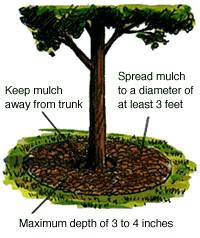 |
| Diagram by: Arbor Day Foundation |
Another resource:
 |
| Diagram by: Harvest Power |
City of Toronto has a great resource too:
 |
| Planting Techniques and Maintenance - Tree Protection, City of Toronto |
Please be aware,


