I get frustrated when folks complain about how their Daylilies look once the heat of the summer roles in. Especially when they want to remove and get rid of the plant because of it's poor appearance in the late summer.
There's a way to avoid all that....
This year, the summer heat may have come later than normal, but the effects of the heat were first noticed on Hemerocallis, Daylily plants. Lush green grassy leaves adorn the plant in the early part of the summer, ushering flowers all throughout June and July. Then this happens:
As shown above, the Daylily at the top of the photo shows the grassy foliage turning yellow. I left this one alone to demonstrate the difference. The old foliage flops over and looks weak. Depending on the type of Hemerocallis you have, this usually happens after their big floral display or during a drought laden period.
To avoid this and you may find it odd, but I just yank out all the foliage - yes ALL. That is what I did to the Daylily at the bottom of the photo. If you look carefully, underneath all the droopy leaves, the plant begins to send new foliage out from the roots. Leave those and pull out the old-yellow ones. If you don't see any, pull them all out.
Make sure you don't cut back the leaves, but instead, pull them out. They come free so easily. Leaving dry stalks at the base can cause rot sometimes. It's best to just yank them out.
Within two weeks, you'll see new, vibrant green foliage emerging from the roots and within 3-4 weeks, you'll have a great mound of lush growth that will extend all the way into late October. It just extends your perennial border. Yes, you'll have to be patient and wait few weeks with a look of bareness, but in the end it's so worth the effort.
I've had great success in even getting the re-blooming varieties to extend their bloom even further with this leaf removal. If you've ever transplanted or divided Hemerocallis plants, you may have noticed they have large thickened roots (like a mini potato). These thickened roots store up water and nutrients. This is the plant's way to store up reserves. When the leaves are removed, the plant can regenerate from that stored energy. The renewed growth, can then start the process to replace those reserves again before the onset of winter.
All of the varieties in the picture above are Stella D'oro. A repeat bloomer. I find these among some of the most valued in mass plantings. They extend the flowering season and bear a hardiness and vigour some of the more cultivated ones do not have.
Try repeat blooming varieties like:
Stella D'oro
Red Hot Returns
Bonanza
Dragon's Eye
Happy Returns
Janice Brown
My Ways
Pardon Me.... there's many more, I'm certain!
When you leave sad looking Daylilies with spent flower heads and yellow foliage, it just takes the spark out of the garden in late summer. Try removing all the leaves once you see them yellowing and find out the difference it can make in your garden.
These photos were taken September 21st and the leaves and foliage will remain green until frost.
So much prettier and worth the effort!
Showing posts with label maintenance. Show all posts
Saturday, September 23, 2017
Why I Remove All Hemerocallis Leaves In Early August
Tuesday, May 06, 2014
Plant Profile: Yucca filamentosa - Maintaining and Sustaining
I find most Yucca filamentosas are never properly taken care of. Folks don't realize that hardy yuccas require regular maintenance
and a little TLC to get them to last for more than a few years. Otherwise they die out and
look tired.
Here's how to maintain them:
Yucca filamentosas expand and grow to become clumps. They flower generally after they reach 2 to 3 years in age.
A long spike of white flowers emerges from the centre of each plant in late June and blooms for about 3 weeks. Once the flower stalk begins to go to seed, the flowered plant begins to whither and die back. The trick is to peak beneath the foliage in order to find little plants emerging from the base. Sometimes, if the 3 year old original plant starts to fade and wilt over, it smothers the young, new growth that will come from the root system. You must cut out the parent plant and allow the younger ones to breathe and emerge properly. Parent plants will not re-bloom.
Yuccas have deep root tubers. They can go down to 24" or more. Tough plant to dig out. Once the parent plant dies back with the old flower stock, the base of the plant begins to rot and can cause other smaller roots to rot with it. As the foliage starts to brown, the plant beneath loses vigor and it will fall on to itself. Making it rather untidy.
Once all the flowered plants have been removed, you will see baby yuccas around the base of the original plants.
Old, dry, and damaged blades of foliage should be completely removed, not cut out. You'll need to do this in succession. Leaves wrap around the stem as it whorls up to the centre. Remove each this way, and they will come off with ease. Ripping them out of sequence will damage the stem or leave remnants of the leaf base still attached. These will whither and rot, causing some rot to occur at the root level. You want good air circulation to strengthen the stem.
Yuccas will force new growth from the centre, adding newer leaves during the growing season. Within a growing season, they will become deep green again. Much needed light and air then can help newer growth emerge and keep your yuccas looking vibrant and not limp or discoloured.
Winter maintenance:
If you have many clusters of yucca, all healthy and the flowered plant removed, sometimes it's best to tie up the blades of foliage into a pony tail of sorts. This keeps the foliage off the ground and away from moisture and soil. Rip off one long leaf from the base of the plant. Use it as a binding. Gather the blades at the base and use the binding leaf to keep the plant together. This will keep the foliage upright and away from standing water or mushy soil. Come spring, remove the binding and allow the plant to fall into natural habit.
By removing older plants, newer plants will take over and you will be able to enjoy yuccas in your garden for a very LONG time, without them looking like they need to be yanked out.
Two months after my TLC, this is the same clump of yuccas flourishing again:
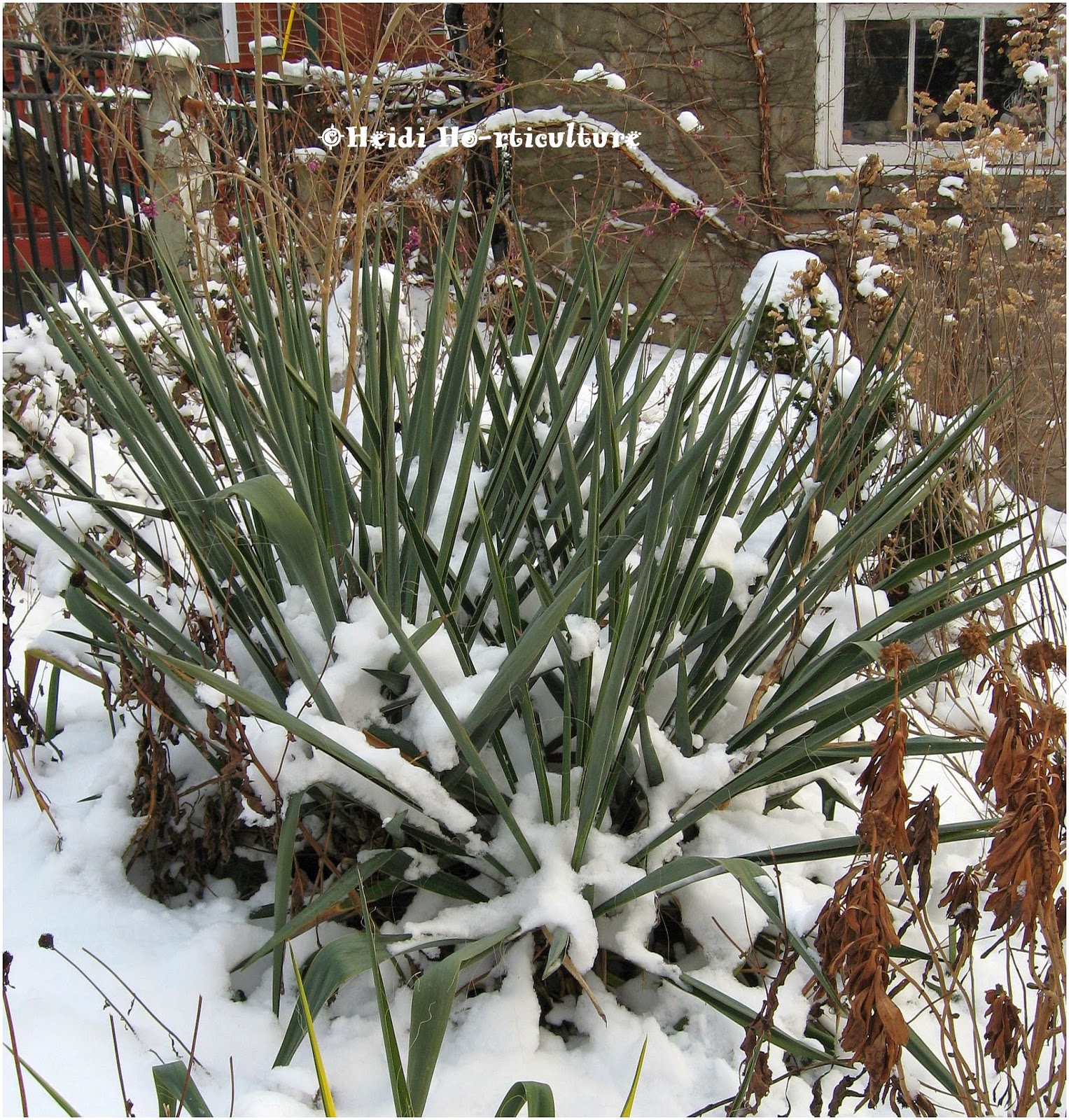
![]() |
| When healthy, even snow won't weigh down older yucca leaves. |
Yucca filamentosas expand and grow to become clumps. They flower generally after they reach 2 to 3 years in age.
A long spike of white flowers emerges from the centre of each plant in late June and blooms for about 3 weeks. Once the flower stalk begins to go to seed, the flowered plant begins to whither and die back. The trick is to peak beneath the foliage in order to find little plants emerging from the base. Sometimes, if the 3 year old original plant starts to fade and wilt over, it smothers the young, new growth that will come from the root system. You must cut out the parent plant and allow the younger ones to breathe and emerge properly. Parent plants will not re-bloom.
Yuccas have deep root tubers. They can go down to 24" or more. Tough plant to dig out. Once the parent plant dies back with the old flower stock, the base of the plant begins to rot and can cause other smaller roots to rot with it. As the foliage starts to brown, the plant beneath loses vigor and it will fall on to itself. Making it rather untidy.
![]() |
| Like I did here, cut the whole parent plant out. Be sure it has the flower stalk like this one. |
![]() |
| It is easiest to cut out with open pruners, using the blade like a knife and slice it out as close to the ground as possible. They are like potatoes, quite juicy. |
![]() |
| Lift up all the blades of yucca and remove any discoloured or brown leaves from the stem. |
![]() |
| Pull down on the leaves - quite hard. |
![]() |
| Like celery, they snap clear off the stem without causing damage. If you yank on them upward, you can yank the whole stem away from the root. Always pull downwards. |
Old, dry, and damaged blades of foliage should be completely removed, not cut out. You'll need to do this in succession. Leaves wrap around the stem as it whorls up to the centre. Remove each this way, and they will come off with ease. Ripping them out of sequence will damage the stem or leave remnants of the leaf base still attached. These will whither and rot, causing some rot to occur at the root level. You want good air circulation to strengthen the stem.
Yuccas will force new growth from the centre, adding newer leaves during the growing season. Within a growing season, they will become deep green again. Much needed light and air then can help newer growth emerge and keep your yuccas looking vibrant and not limp or discoloured.
Winter maintenance:
![]() |
| Tough winters can cause this - half the foliage yellowing and the main core limp. |
By removing older plants, newer plants will take over and you will be able to enjoy yuccas in your garden for a very LONG time, without them looking like they need to be yanked out.
Two months after my TLC, this is the same clump of yuccas flourishing again:
Subscribe to:
Posts (Atom)